SMA Intensive Recorded Webinars
Expand and deepen your knowledge and supplement your SMA education, on your own schedule. Each intensive course is informative with clinically relevant information and techniques that will help practitioners and their patients.

An introduction to the SMA method
SMA intensive recorded webinars are an excellent way to expand and deepen your knowledge and supplement your SMA education.
They are also a great introduction to our method of assessment and treatment if you are considering our more comprehensive in-person intensive classes, live intensive webinars, or the SMAC Program’s in-person courses and live webinars. See the current course schedule.
The recorded webinars
Each course is sold through our distribution partners: Lhasa OMS in the USA and Net of Knowledge internationally. Please read the release of liability before you buy.
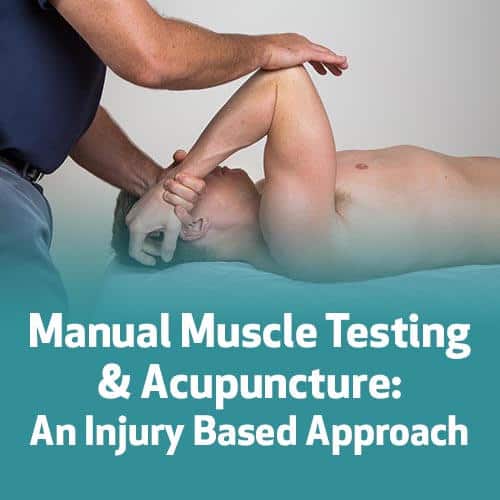
Manual Muscle Testing & Acupuncture: An Injury-Based Approach
Instructor: Matt Callison
A 62-video treatment library drawing on 33 years of clinical experience, blending traditional Chinese medicine with an injury-based sports medicine approach to assess dysfunction, restore strength, improve movement quality and reduce pain.
Organized into three courses, the library teaches you to identify the muscles and structures contributing to pain, dysfunction and injury, then evaluate the effects of treatment immediately. Each condition is explored through clinical assessment, acupuncture treatment and re-assessment.
Motor Point Needle Protocols
Instructor: Matt Callison
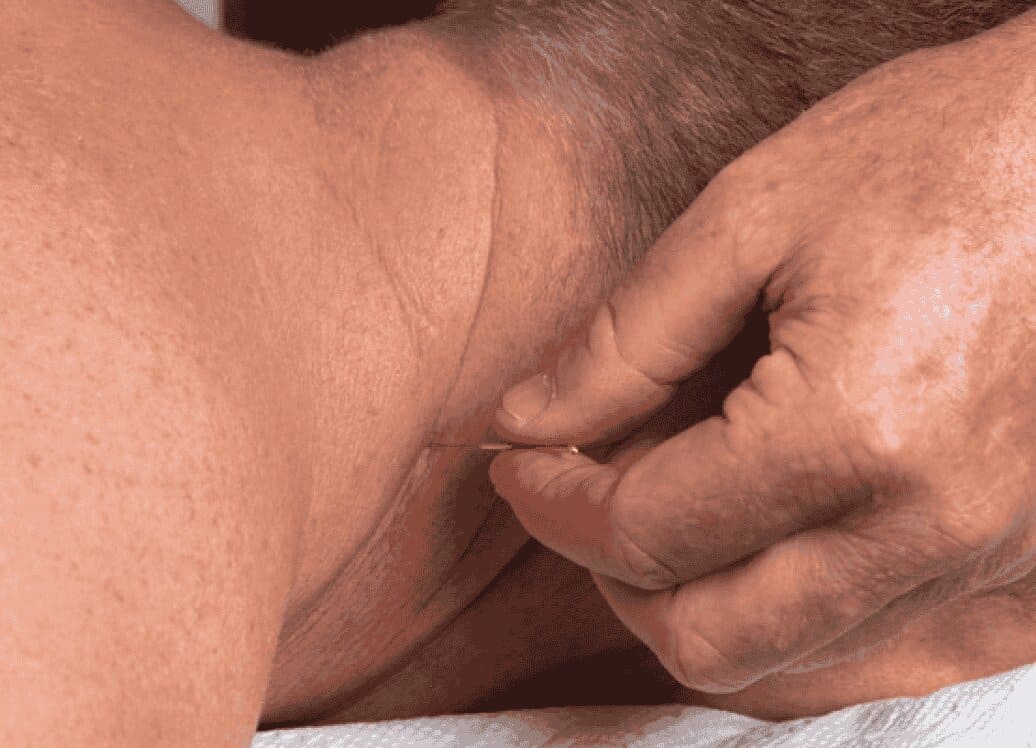
Four recorded webinars on muscle motor entry point locations and needle protocols, organized by region: vertebral and sacral fixations; low back, hip and groin; lower extremity; and neck, shoulder and upper extremity.
Recordings from AcuSport Education’s cadaver dissections verify each location and the best way to needle the point, sharpening your appreciation of needle depth and de qi. Earn distance CEs toward your SMA certification from anywhere in the world.
Psoas Major: Structure, Function & Treatment
Instructors: Matt Callison & Brian Lau
The psoas major is a crucial structure to understand: it is involved with the stability and balance of the lumbar spine, pelvis and hip joint. Because it sits in such a central location, imbalances in this muscle can affect the entire body, and its influence is especially important when working with low back, hip and groin pain.
This course explores the functional anatomy of the psoas major and its role in spinal and hip mechanics: how imbalances affect the spine and pelvis, and how the muscle is involved with lordosis, spinal rotations, spinal bends and pelvic tilts. It also explores the muscle’s channel and organ relationships to help integrate the anatomy into the channel system. Comprehensive treatment approaches use local, adjacent and distal acupuncture, myofascial release and corrective exercises.

Quadratus Lumborum: Structure, Function & Treatment
Instructors: Matt Callison & Brian Lau
The quadratus lumborum (QL) is a crucial structure of the lumbar spine. Despite its importance, its role in stability and its contribution to low back pain are controversial and not fully understood. The QL is reported to be more of a postural muscle that acts as an intersection of tensional force than a prime mover in any particular action. Because all muscles interconnect through the fascial system, the practitioner must look further than treating the QL as an individual pain generator.
This presentation covers the latest research on the muscle, its complex structure and relevant neurology, its myofascial connections to neighboring tissues and its sinew channel connections. It also covers assessment, acupuncture point protocols and the local anatomy related to proper needling, plus targeted myofascial release and corrective exercise protocols to help correct postural imbalances, restore function and reinforce the acupuncture.
Objectives
The practitioner will be able to:
- Describe the complex structural, fascial and neural anatomy of the quadratus lumborum.
- Describe the actions of the quadratus lumborum.
- Describe how the quadratus lumborum links with the channel system.
- Apply functional assessments to find imbalances in the quadratus lumborum and its connected myofascial tissues.
- Apply acupuncture, myofascial release and corrective exercise protocols for the quadratus lumborum.
Taught by SMA faculty
Read about Matt Callison, Brian Lau and the rest of the SMA faculty on the About page, and see which courses they are teaching on the SMA in-person course dates & locations page.
Policies
Purchasing a webinar means you agree to the release of liability.
Go further with the SMAC Program
The Sports Medicine Acupuncture Certification is the most advanced training available for acupuncturists who want to excel at treating sports and orthopedic injuries.